
Blog
Helpdesk and Technical Support Outsourcing: What to Look For
9/26/2026
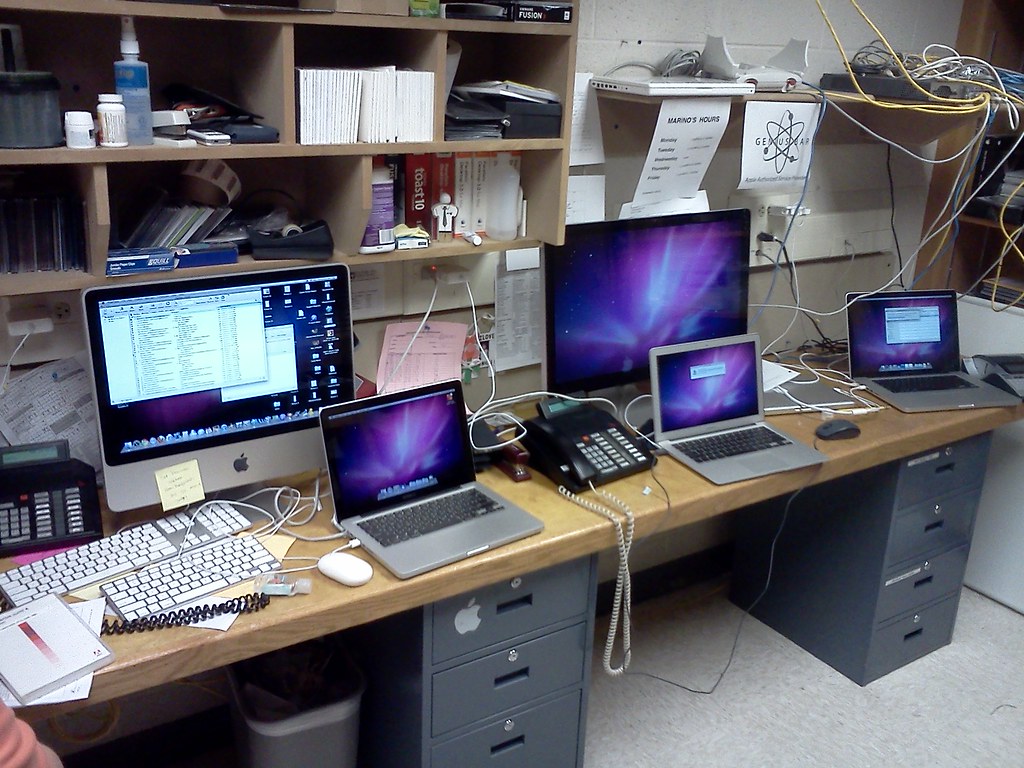
A slow help desk is a silent tax on every team in a company, not just the one filing tickets — employees and customers waiting on IT or product support can't do their own jobs until the ticket closes. Outsourced CX works with companies to fix this by outsourcing helpdesk and technical support the right way, and the data below shows exactly where most internal teams are losing time.
How long should a support ticket take to resolve?
The average support ticket takes 3 days and 10 hours (82 hours) to resolve, but the top 5% of support teams close tickets in 17 hours, and the top 20% close them in under 43 hours. That's nearly a 5x gap between average and top-performing teams, and it's rarely because top teams have smarter agents — it's because they have enough staffed hours to work tickets continuously instead of letting them sit in a queue between shifts.
Ticket complexity matters, but not as much as staffing coverage. Simple Tier 1 issues resolve in minutes and cost as little as $6 to handle, while complex Tier 3 escalations can take days and cost over $35 per ticket in SaaS environments. The gap between average and top-quartile resolution time shows up mostly in Tier 1 and Tier 2 tickets — the ones that should resolve fast but get stuck behind a backlog when there aren't enough hands working the queue.
Why does technical support have such high turnover?
Technical support outsourcing exists partly because the field has roughly 40% annual turnover — nearly three times the 12–15% average across all industries — which makes it expensive and disruptive to staff internally. Every time a technical support hire leaves, a company loses months of accumulated product knowledge and has to restart training from scratch, and that cycle repeats roughly every two and a half years per role at the industry's turnover rate.
Outsourced providers absorb this churn differently: because agents are managed across a pool of accounts rather than a single company's headcount, providers can backfill a departing agent with someone pre-trained on similar tools and ticket types, shrinking the knowledge-loss window from months to weeks. Outsourced CX builds documentation and runbooks into every technical support engagement specifically so that institutional knowledge lives in shared systems, not just in one agent's head.
What should be documented before outsourcing technical support?
Before handing off technical support, document your top 20–30 recurring issues with step-by-step resolution paths, your escalation matrix (what gets kicked back to engineering versus resolved by support), and access requirements for your ticketing system. Forrester's 2024 State of the Service Desk report found that only 55% of employees feel fully supported by their organization's IT service desk — and a thin knowledge base is usually the root cause, whether support is in-house or outsourced.
A realistic per-agent target for outsourced technical support is 25–35 tickets a day for Tier 1 work, though quality metrics — CSAT, first-contact resolution — matter more than raw ticket count. A provider optimizing purely for volume will hit ticket-count targets while pushing unresolved issues back into the queue as repeat contacts, which costs more in aggregate than working fewer tickets correctly the first time.
Can AI tools speed up outsourced technical support?
Yes — AI-assisted ticket triage and knowledge-base search can cut resolution time significantly, with AI-enabled platforms showing a median resolution time of around 4.4 hours compared to roughly 71 hours for tickets handled without AI assistance. The gap is largest on Tier 1 issues that match documented patterns; AI triage can route or even auto-resolve these before a human agent ever touches them, freeing up staffed hours for the genuinely novel Tier 2 and Tier 3 cases that still need a person.
Outsourced CX pairs trained agents with AI-assisted triage tools so straightforward tickets move fast while complex ones still get routed to a human who can actually solve them — the goal is faster resolution, not fewer humans in the loop.
Getting your ticket backlog under control
If your average resolution time is closer to the 82-hour industry average than the 17-hour top-tier benchmark, the fix is almost always staffing coverage, not agent skill. Outsourced CX recruits and manages helpdesk and technical support agents with documented runbooks and AI-assisted triage built in from day one, so tickets get worked continuously instead of piling up between shifts. Start by pulling your current average resolution time and comparing it against the 43-hour top-20% benchmark — that gap is what outsourcing is designed to close.
What's the difference between outsourcing Tier 1 and Tier 2 technical support?
Tier 1 support handles known issues with documented fixes — password resets, basic configuration errors, common bugs already listed in a knowledge base — and typically resolves in minutes at a cost as low as $6 per ticket. Tier 2 support handles issues that require investigation: reproducing a bug, checking logs, or coordinating with engineering, and it costs meaningfully more per ticket because it takes longer and requires deeper product knowledge.
Most companies outsource Tier 1 first, since it's the highest-volume, most repeatable work and the easiest to document into a runbook a new agent can follow within days of onboarding. Tier 2 outsourcing works best once a provider has proven itself on Tier 1 for a few months and built enough product familiarity to handle escalations without constant back-and-forth with your internal team. Outsourced CX typically starts new technical support engagements with Tier 1 exclusively, expanding into Tier 2 only after the first 60–90 days show strong resolution and CSAT numbers.